
Website

Vietnamese Rubber Master: From Tire Shoes in 1947 to a Brand That Can Get Into Stores

A brand that grew out of Vietnam battlefield tire shoes in 1947 now operates as a general agent in China, runs cultural tourism stores, and offers wholesale and franchise opportunities. This site must persuade two kinds of people at once: tourists passing through scenic areas and franchisees preparing to invest.

越南橡胶大师 Dongxing, Guangxi Launched 2026-10-18
Vietnamese Rubber Master: From Tire Shoes in 1947 to a Brand That Can Get Into Stores
Client越南橡胶大师
Industry & TraitsWebsiteE-commerceLifestyle
RegionDongxing, Guangxi
Launched2026-10-18
Delivery Team花里云花里云
访问案例

Customers and Tasks

Vietnamese Rubber Master is the China general agent for original Vietnamese rubber slippers, with three business lines: chain retail stores in cultural and tourism commercial districts, online and wholesale volume sales, and franchising for entrepreneurs. The brand's origins can be traced back to 1947—during the Vietnamese war of resistance against France, discarded military tires were hand-cut into slippers; Vietnamese people call them dép lốp, tire shoes.

This determines that the official website must serve two types of readers at the same time, and their concerns hardly overlap:

  • Tourists and consumers care about whether they are comfortable to wear, whether they are worth buying as souvenirs, where the stores are, and whether they can customize the colors themselves
  • Franchisees care about whether the source of goods is legitimate, whether supply is stable, what support the headquarters provides, and how long it takes to recoup their investment

One story, two types of readers. What the site needs to do is not blend the two groups together, but let each find what they need within two screens.
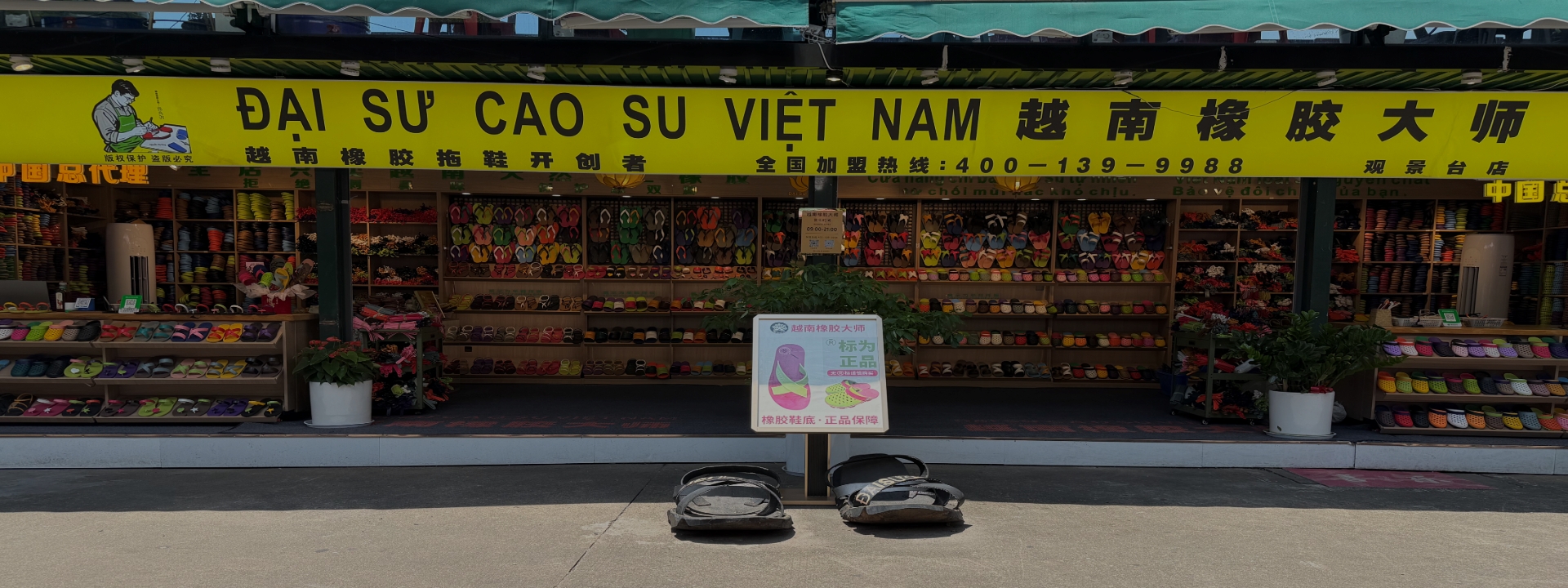
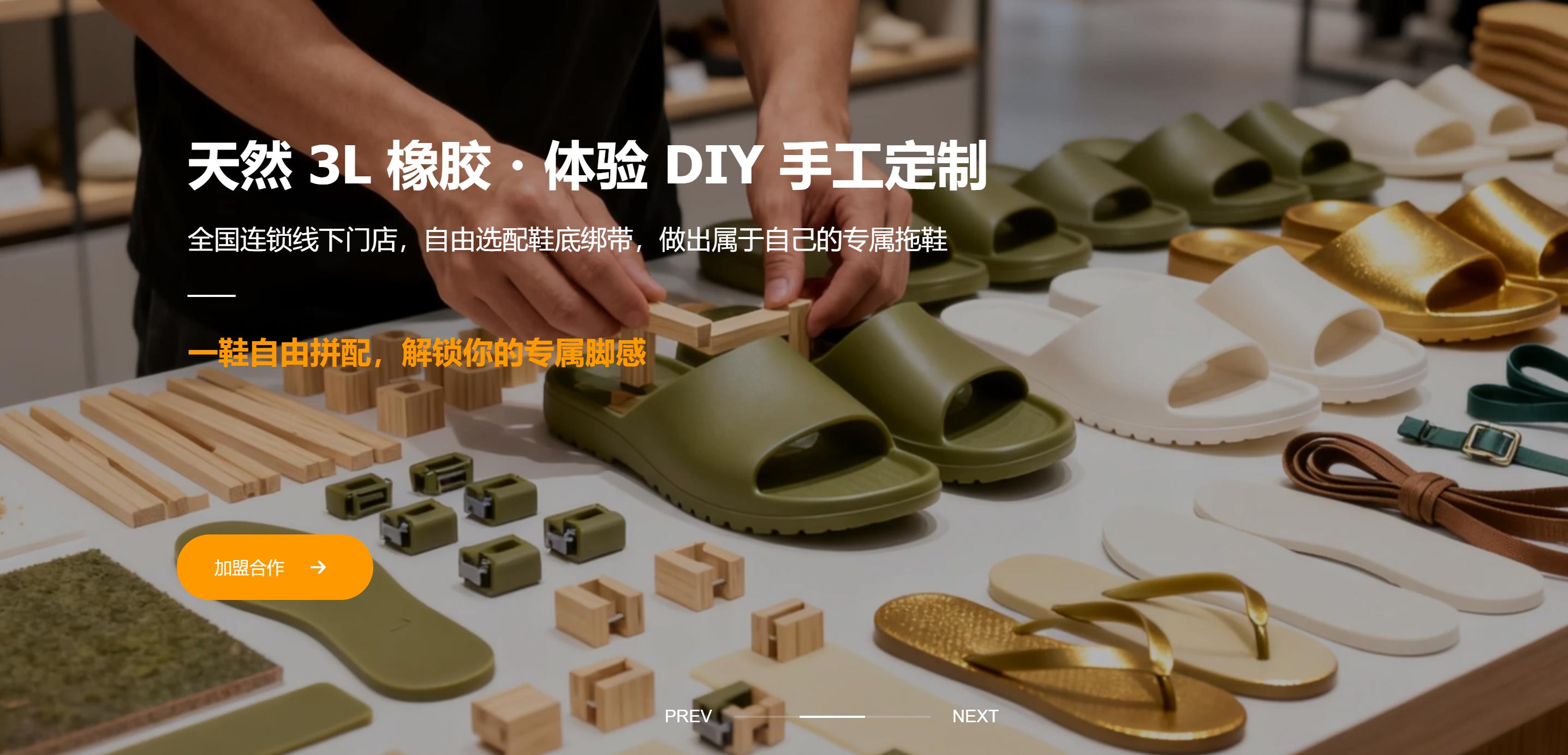
First screen: present the story first, then establish identity.

The hero section is a three-slide carousel, with each slide focusing on one thing:

  1. Battlefield Legend · The Era Memory of a Pair of Slippers—1947 tire shoes, paired with "Explore the Brand"
  2. Natural 3L Rubber · Experience DIY Handmade Customization—Nationwide chain stores allow free selection of soles and straps, paired with "Franchise Partnership"
  3. Durable and Odor-Resistant, Versatile Rubber Slides for All Scenarios—Home, travel, and commuting; one shoe for multiple uses, paired with "Product Center"

The main buttons on the three slides each point to different destinations, and this is intentional: people drawn in by the story go to see the brand, those moved by DIY go to see stores and franchise opportunities, and those who only care about practicality go directly to the products.

All on one homepage: from 1947 to the store address

The homepage presents its information as one timeline plus one business line:

  1. Three-screen story carousel — emotion first, not specifications
  2. About Us — status as China general agent, origins traced back to 1947, 3L latex and high-temperature vulcanization, stores in cultural and tourism commercial districts
  3. Brand partnerships — endorsement by a Sanda champion, signed CCTV advertising placement, long-term collaboration on the official website and content operations
  4. Four reasons to choose us — historical heritage, virgin rubber, in-store DIY, authenticity guaranteed by the general agent
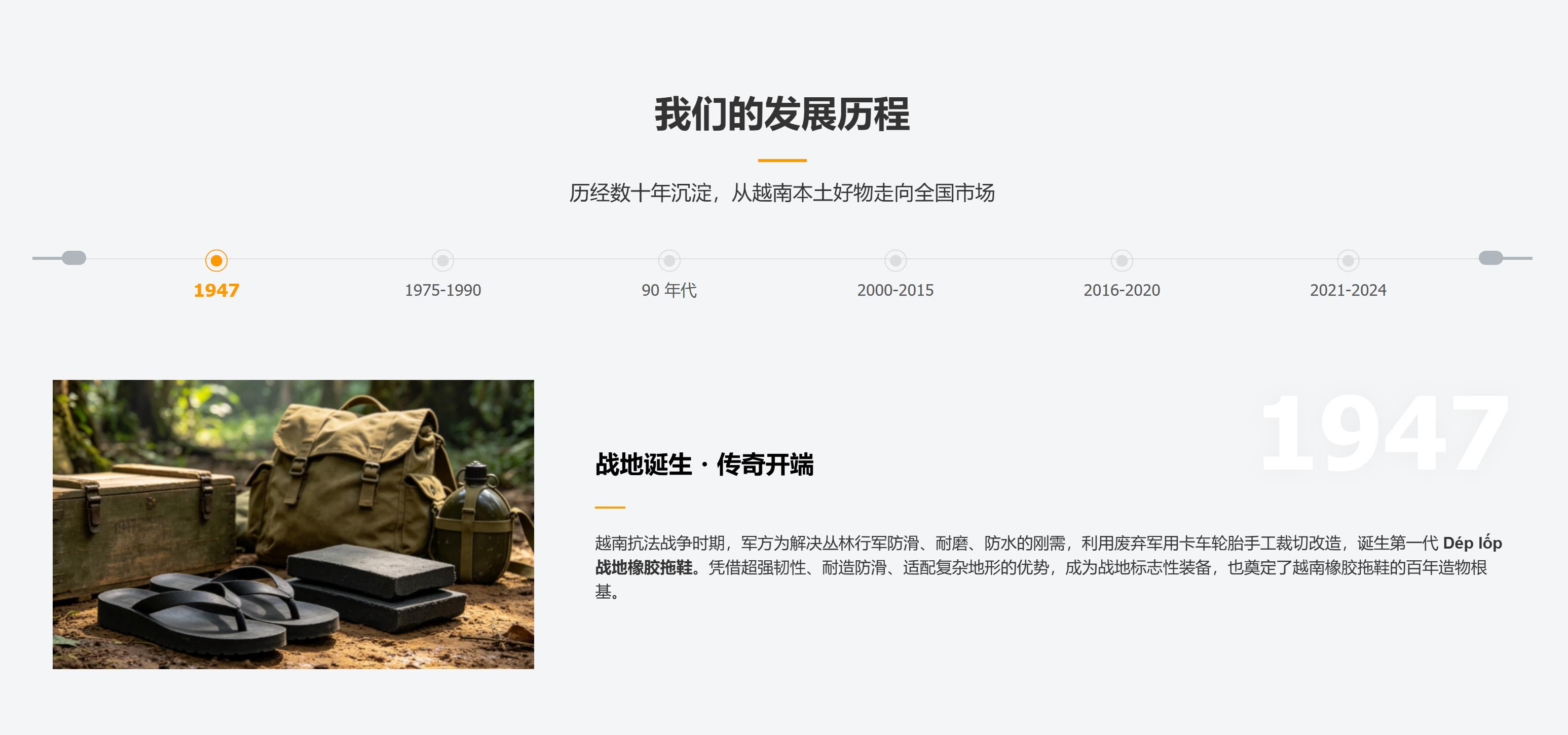
  5. Development history — born on the battlefield in 1947 → widespread adoption from 1975–1990 → entry into China via border trade in the 1990s → craftsmanship upgrades from 2000–2015 → category expansion from 2016–2020 → general agent established in 2021–2024 → cultural tourism chains and overseas expansion from 2025 to today
  6. Thirteen products — one-strap slippers, flip-flops, clogs, side-clip sandals, cross-strap sandals, horizontal-strap sandals, Roman sandals, star-heart slippers and more, each with a one-line positioning
  7. Store experience gallery — real store photos, DIY sessions, customer photos
  8. Contact and franchising — 400 hotline, investment address, online inquiry

One thing worth mentioning: the development history uses seven segments rather than a single brand story. This brand's persuasiveness lies entirely in its timeline — military supplies in 1947, border trade in the 1990s, craftsmanship upgrades after 2015, general agent qualification in 2021, overseas stores in 2025; each segment is a verifiable point in time. Compressing the seven segments into one lyrical passage would mean discarding the hardest evidence.

Write authentic as something that can be verified.

The biggest problem with the slipper category is that everyone claims to be authentic. The site does not stop at adjectives; instead, it breaks "authentic" down into four verifiable points:

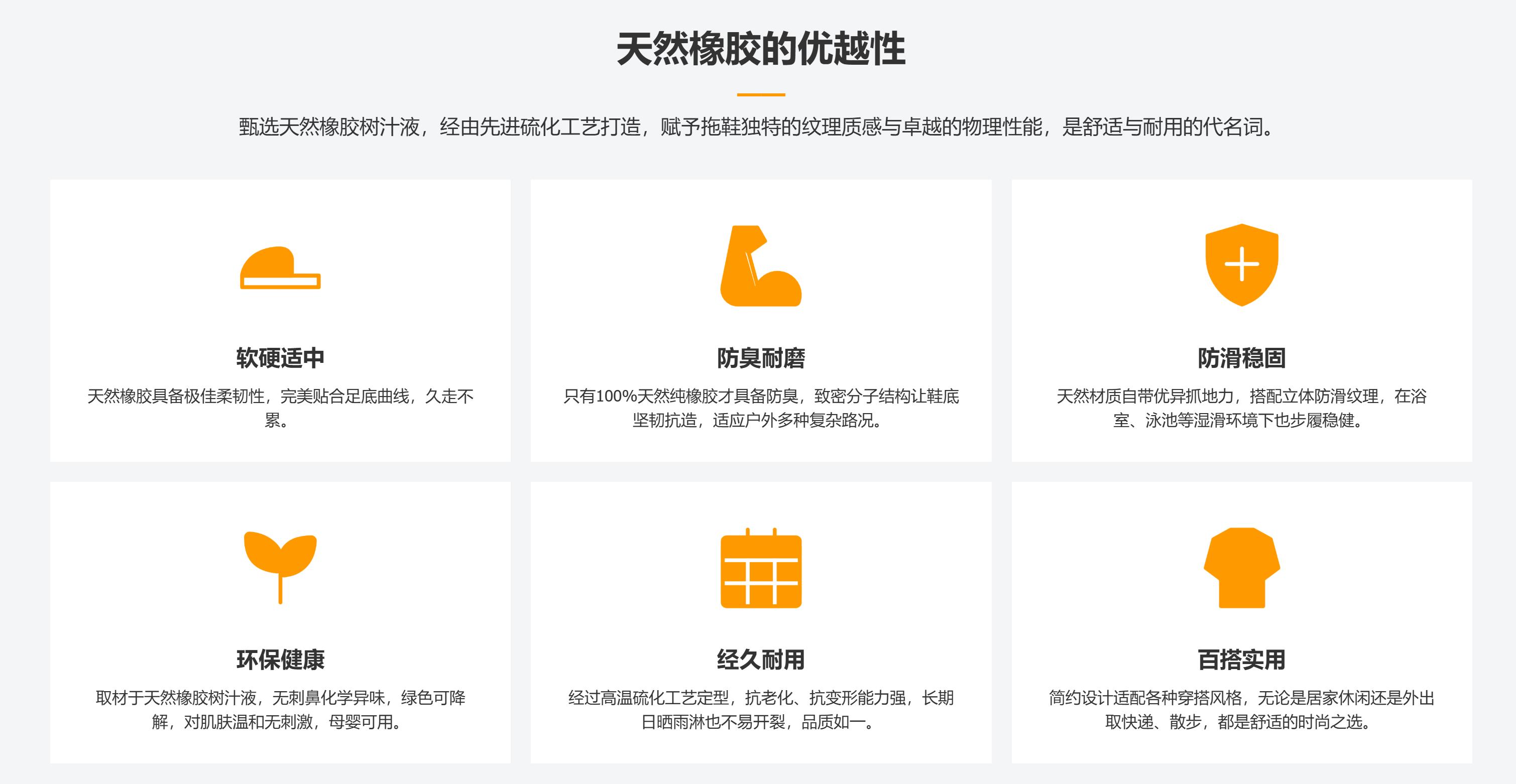
  • Raw materials — Vietnamese 3L virgin natural rubber, one-piece molded from fresh raw latex, distinguished from reclaimed rubber, synthetic rubber, and blended filler rubber
  • Craftsmanship — integral vulcanization under high temperature and high pressure, the sole is solid throughout, with no cavities, no bubbles, and no foam interlayer; it does not crack when bent and does not collapse underfoot
  • Structure — mortise-and-tenon-style detachable DIY; sole, upper, straps, and accessories can be freely replaced, and the buckles are secure and do not loosen
  • Channel — qualification as general agent for China, unified supply across the national chain, and an authenticity verification system

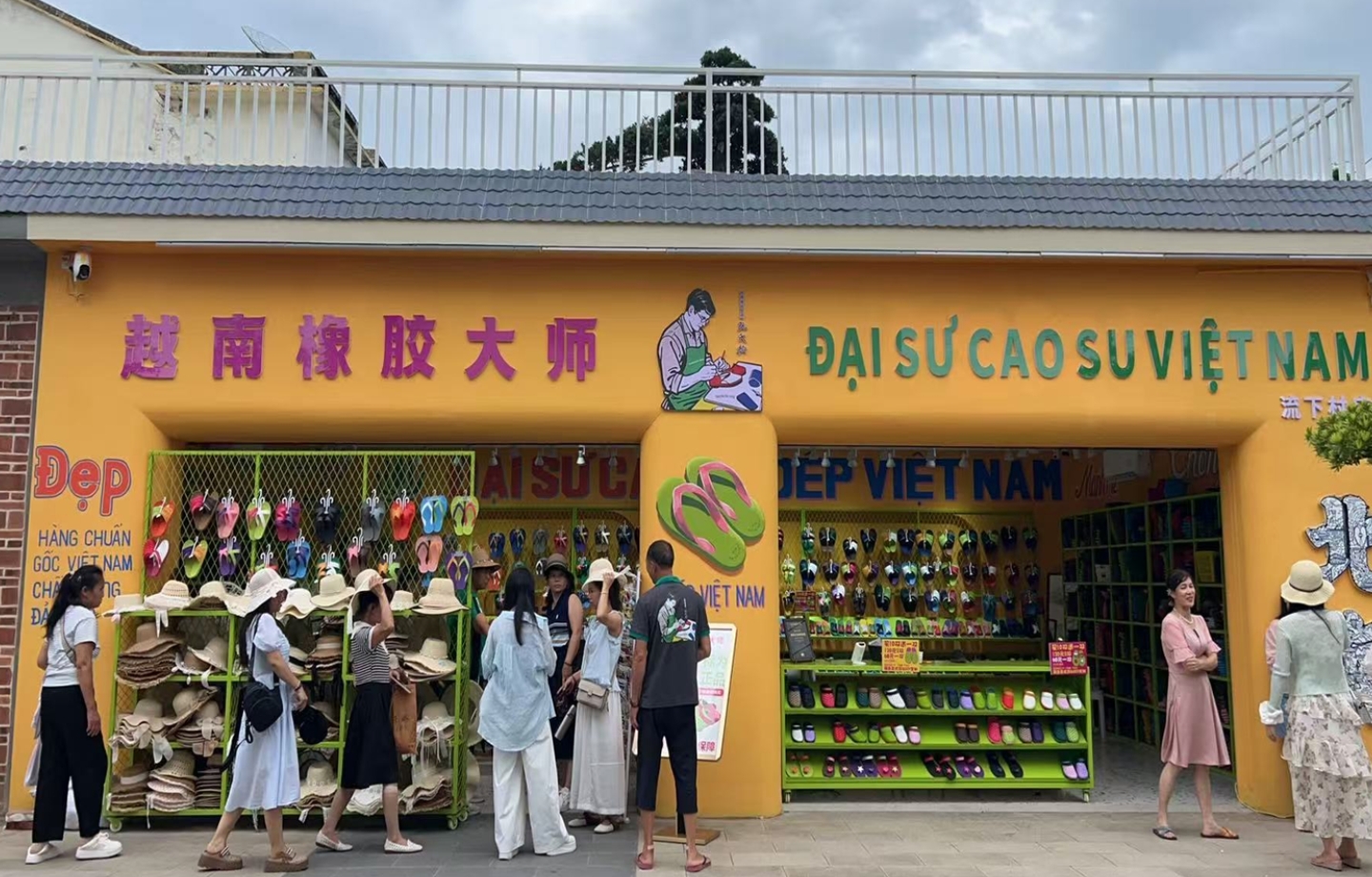
Add another layer of geographical evidence: stores in Beihai, Yangshuo, Mangshi, Xichang, and Hainan, as well as overseas locations in Hawaii, Chile, Singapore, Malaysia, and Indonesia. For franchisees, store photos and city lists are more useful than any adjective.

Design Notes

Two entry points, not one. The three main buttons in the homepage carousel lead to Brand, Franchise, and Products respectively. A common mistake on brand sites is funneling all traffic to "Inquire Now," which leaves both types of readers feeling interrupted. Let those who want the story read the story, and let those who want the numbers do the math.

Make history a timeline, not a lyrical passage. Seven periods, seven milestones, each with one conclusion plus two or three facts. Skimmers get the years; careful readers get the changes in craftsmanship.

Define products in one sentence, not a pile of adjectives. One-strap slides: "Minimal flat sole, versatile at home." Flip-flops: "Classic thong style, made for beach trips." Clogs: "Perforated closed toe, breathable and easy to wear." When thirteen styles sit side by side, one sentence helps people choose better than a paragraph of copy.

The store gallery serves as proof of "actually existing." Showing three categories separately — stores, DIY sessions, and buyer photos — convinces people that this brand has real locations and real people running them more than one retouched hero image does.

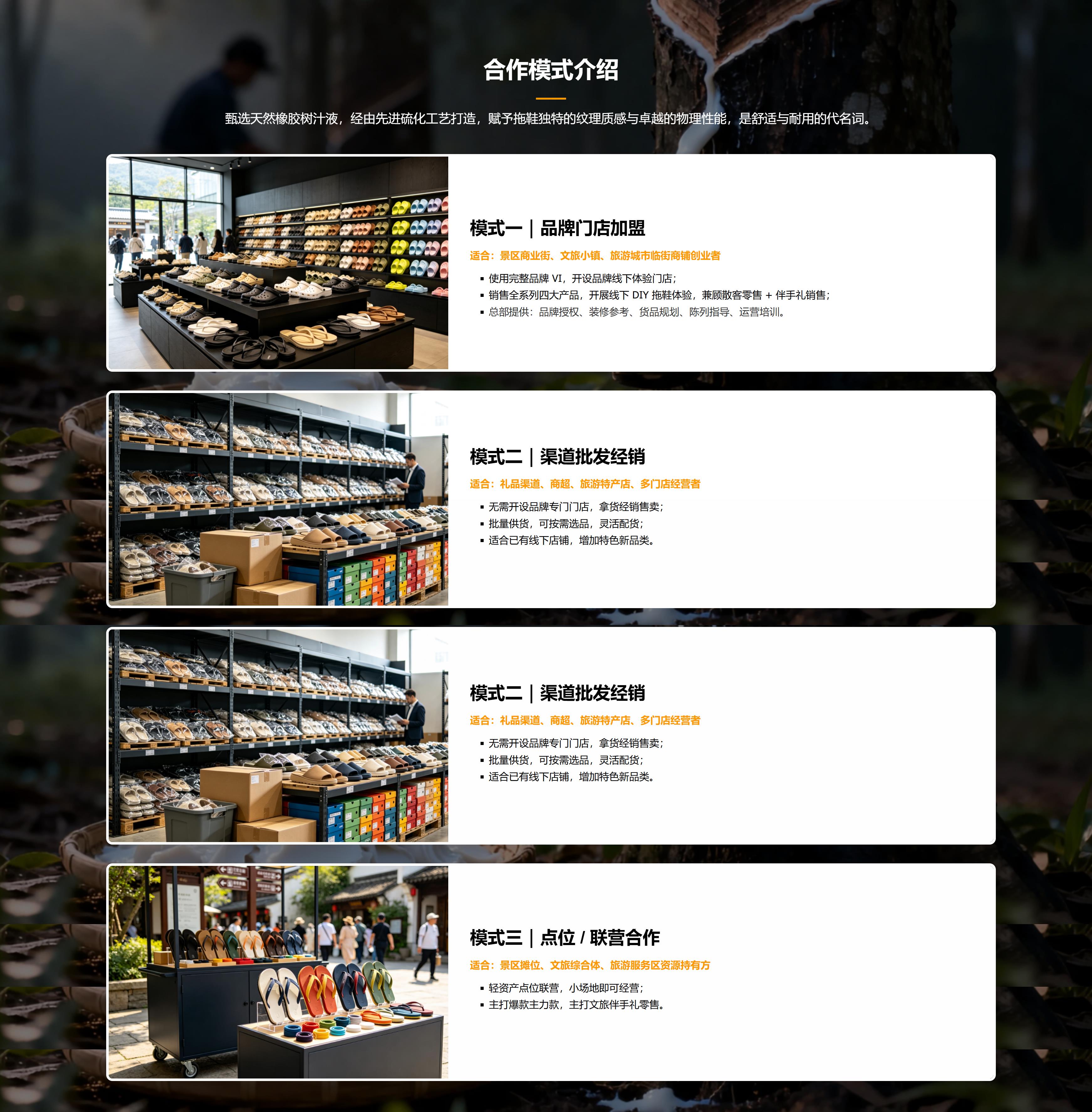
On the franchise page, break support into verifiable items. Supply, brand authorization and VI, partnership models, site selection and display, DIY play training, and after-sales — six things spelled out one by one, with no unverifiable phrases like "all-round empowerment."

y5.jpg