Website

Luo Family Tongshu Zongmu Hall: Turning a 300-year calendrical craft into a verifiable website

A personal website of an intangible cultural heritage inheritor in Xingning, Meizhou, Guangdong. Its task is not to sell things, but to clearly explain the origin, craft, and lineage of a 300-year-old calendar tradition—searchable, verifiable, and readable.

兴宁罗家通书宗睦堂 Xingning, Meizhou, Guangdong Launched 2026-10-19
Luo Family Tongshu Zongmu Hall: Turning a 300-year calendrical craft into a verifiable website
Client兴宁罗家通书宗睦堂
Industry & TraitsWebsiteLifestyle
RegionXingning, Meizhou, Guangdong
Launched2026-10-19
Delivery TeamXiXi

Customers and Tasks

Xingning Luo Family Almanac Zongmu Hall is located in Xingning, Meizhou, Guangdong. It is the earliest publishing imprint of the Luo Family Almanac, was included in the Guangdong Provincial Intangible Cultural Heritage List in 2012, and its current inheritor is the tenth-generation Luo Wen.

This is a personal website, not a corporate site: there is no product list and no inquiry funnel. Most visitors are people who want to understand what this craft is—researchers, media, fellow townspeople, and culture enthusiasts.

So there is only one task: to present the "craft" as something that can be verified. Who passed it down, for how many years, on what basis this is said, and where the items can be seen.
ljts2.jpg

How do you say 首页?

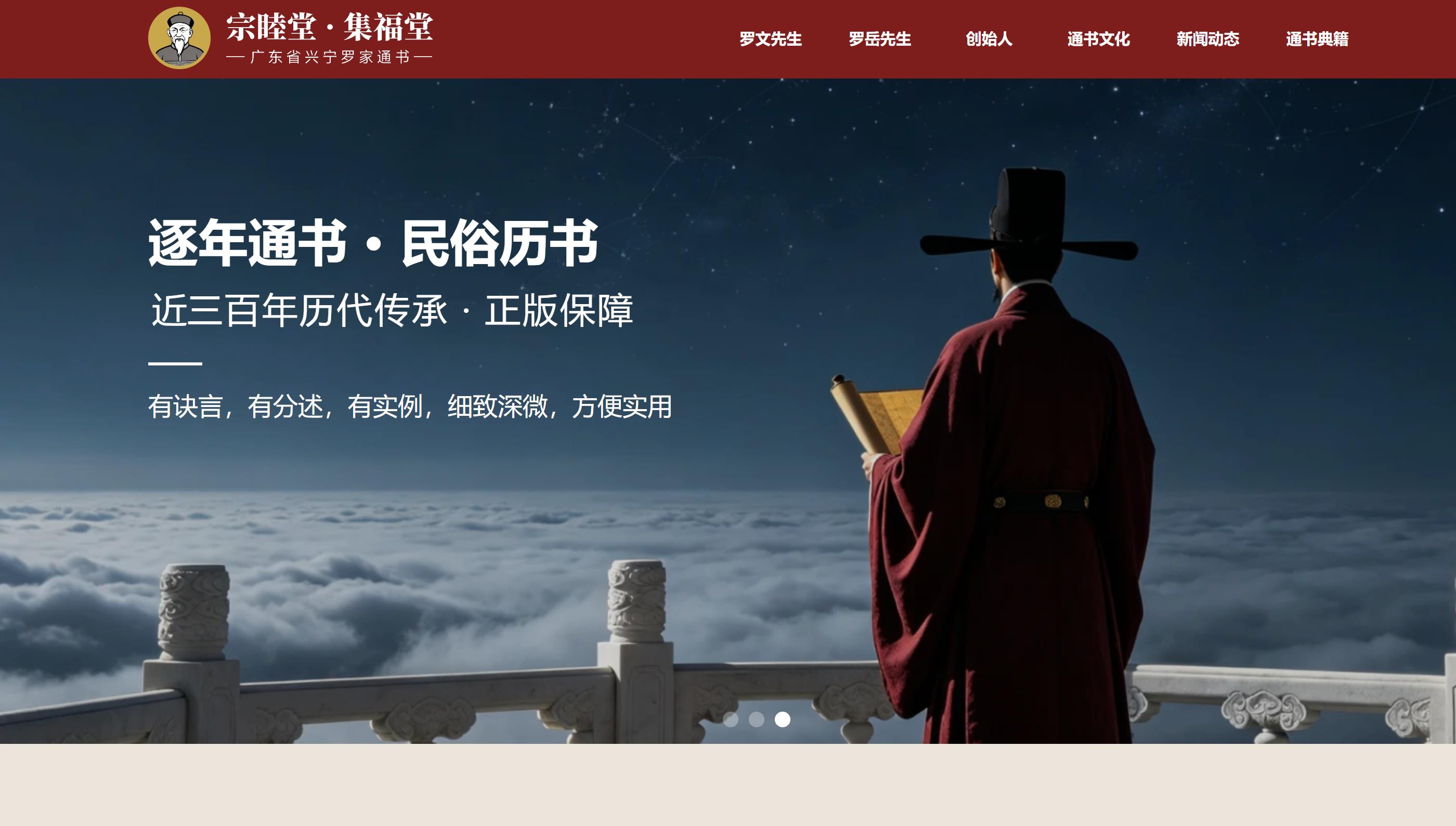
Screen one establishes the person. Hall name, identity, one ancestral precept—said in three lines, no carousel. The first screen of a personal website need not compete for attention; it only needs to let visitors confirm “I’ve found the right place.”

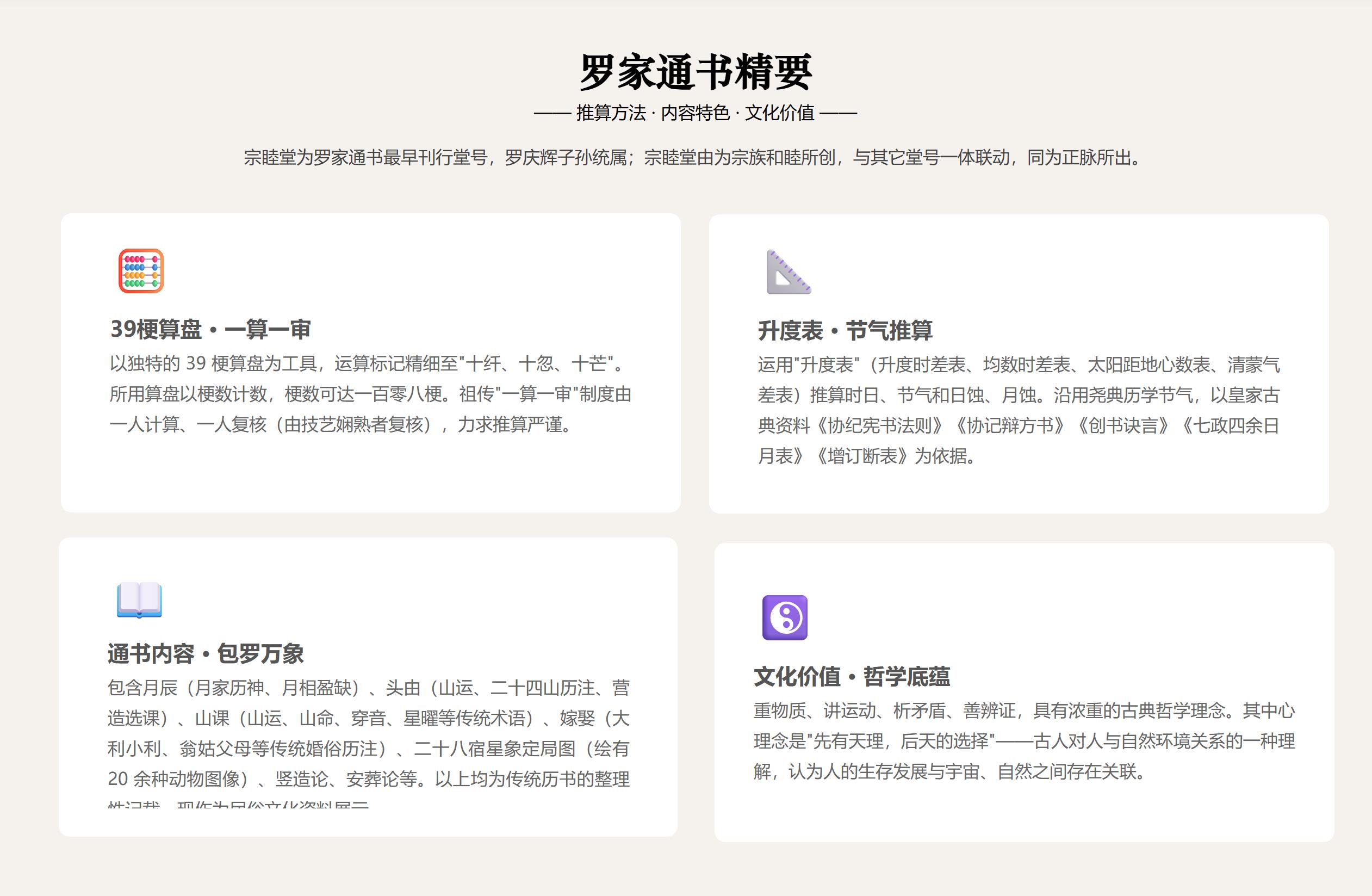
Screen two explains the craft. Calculating tools, calculation methods, almanac contents, and cultural value are placed side by side—leave the parts that are hard to explain to terminology and institutions, not to adjectives.

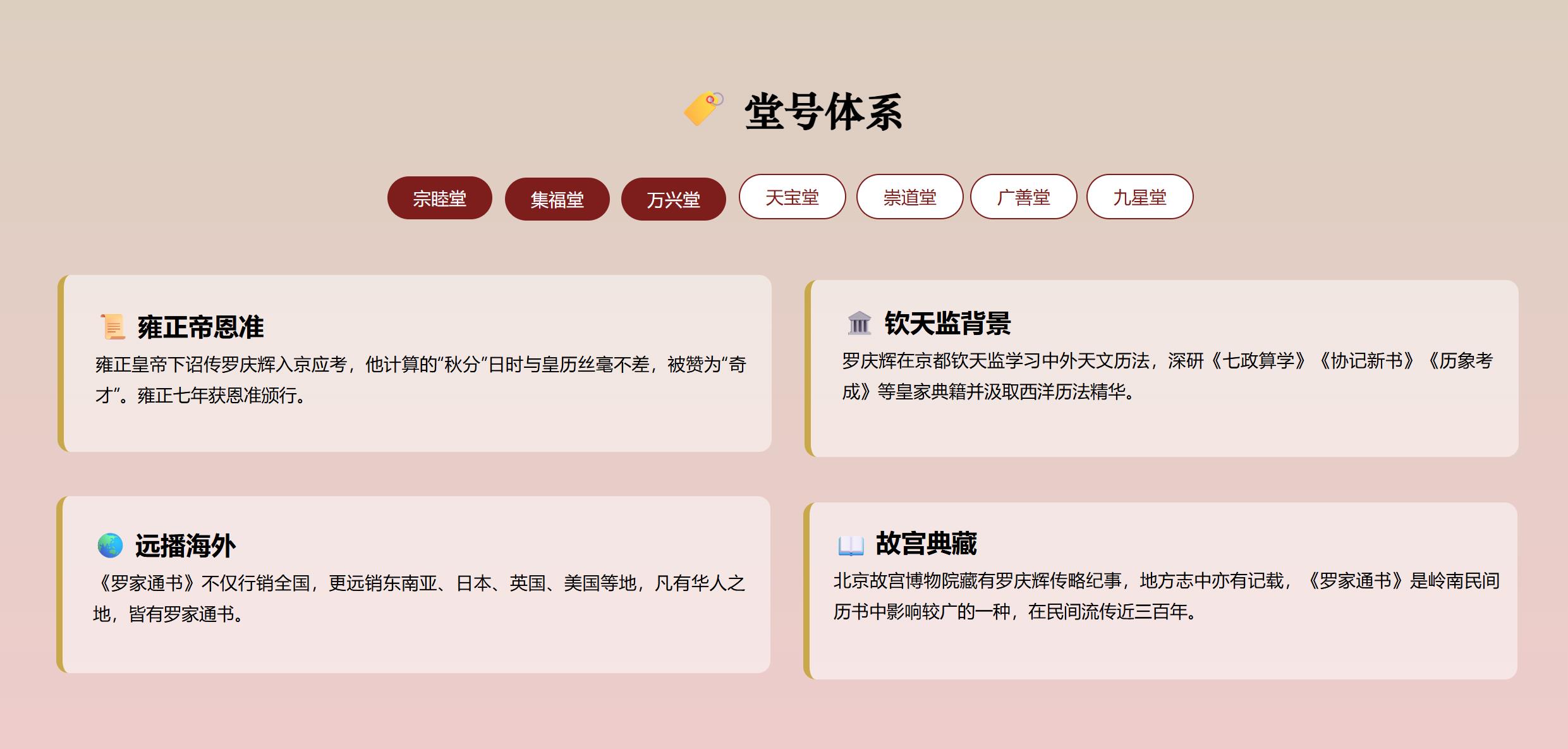
Screen three provides evidence. A ten-generation lineage is arranged in a horizontal chain, running from Luo Qinghui of the Qing Dynasty all the way to today; then come four facts: in the seventh year of the Yongzheng reign it received imperial approval for publication, he studied Chinese and Western calendrical science at the Imperial Astronomical Bureau, the Palace Museum holds a biographical record, and the almanac was exported to Southeast Asia, Europe, and America. The credibility of a cultural site comes from time, place, and verifiable sources, not from the phrase “has a long history.”

After the fourth screen comes continuous updating. Articles on classics and folk culture are titled by questions, giving “what is this craft” a place to be answered one by one—this is also the foundation for a cultural site to be cited by search engines and AI.

ljts4.jpg

Design Notes

A personal website should have restraint. Let the layout yield to text and chronology, not visual showmanship—visitors come to read the content, not to admire the design.

Use a chain, not a list, for the lineage. Ten generations of inheritance arranged as a horizontal line feels more like “inheritance” itself than a numbered list.

Terminology is a boundary. On the site, calendrical annotation content is explicitly labeled as compiled records from traditional almanacs and presented as folk cultural material. This is the restraint a cultural site should have, and it is also accurate expression.

No conversion. The goal of a personal site is to be understood, not converted. Therefore the entire site has no inquiry entry point—only content and contact information.

ljts3.jpg