Holypro · Digital Platform
An enterprise content platform deployed on your own servers. Content, cases, products, team and forms modelled in one place — entered once, published everywhere.
Ten years in, we have laid every layer of enterprise digitalization: domains and ICP filing, websites and mini programs, a content platform, AI applications and private deployment. 1000+ delivered projects across 42 cities.

Twelve common services, grouped into three stages: foundation, build, growth. Each can be taken on its own or folded into the same system — no rebuild later.
Our own platform carries data sovereignty and AI; partner builders carry fast launch; cloud basics solve the entry point; value-added services fill in operations. As a client grows, the path does not change.
An enterprise content platform deployed on your own servers. Content, cases, products, team and forms modelled in one place — entered once, published everywhere.
License issuing and feature-flag management, centralized AI model and key proxy, per-site credit billing, zero-config onboarding.
Connects to your website and WeChat, answers from your own knowledge base, 7×24, with a smooth handoff to human agents.
Your material processed and retrieved locally; data never leaves your network, and every answer is traceable.
A site builder promoted directly by Alibaba. SMS, email, video and cloud security are already integrated; launch in five steps, no server and no code.
PC, mobile, micro-site and mini program unified; edit once in the same backend and sync everywhere; AI site building and AI content generation, with full SEO and GEO controls.
For teams with design standards. Components adjust at the atomic level; results come close to bespoke, freer than typical SaaS.
Designed and built around your business logic, with independent front-end and back-end capabilities, and able to connect to the digital platform.
Register or transfer major TLDs, DNS configured in one pass, seamlessly bound to your site.
Full assistance with documents, review and submission; compliance in place, site launched by the book.
DV to OV tiers, HTTPS across the site, no browser warnings, friendlier to search engines.
Business mail on your own domain; reliable delivery, consistent with your brand.
One-stop delivery from planning and design to development and launch, including content entry and launch acceptance.
An entry point into the WeChat ecosystem; products, booking, forms and membership combined as needed.
Site structure, content and indexing strategy advanced together, organic traffic accumulating steadily.
Security monitoring, backups and incident response, keeping the site stable over time.
The same need looks very different at different scales and stages. These paths are organized by scenario; each points to specific products and comparable delivered cases.
Explain your company, products and cases clearly — live within a week.
For: SMEs building their first siteMultilingual, overseas acceleration and cross-border payments, presented independently to overseas customers.
For: export and cross-border businessKeep producing with the content platform, and build organic traffic through SEO and AI search optimization.
For: teams relying on online acquisitionYour content and data live on your own servers — not reset to zero by someone else’s policy change.
For: companies that care about data sovereigntyStart with the AI assistant and private knowledge base — begin with the part that can actually land.
For: teams that want AI but don’t know where to startBilingual or multilingual site groups, managed in one backend, each language as its own site.
For: companies planning overseas markets1000+ delivered sites cover machinery manufacturing, cross-border trade, education and culture, lifestyle services and e-commerce. Shown here are representative projects launched recently.
 2026-10-25
Website

Food wholesale owners won’t pay for “digitalization”; they’ll only pay for the numbers they can’t get straight. The website for this ordering SaaS made several key decisions: no backend screenshots on the first screen, features organized by business workflow rather than by module, only one next step across the entire site, and a trial form that asks only for headcount.
 2026-10-25
Design Portfolio

A single booth backboard has to serve three kinds of people at once: those who glance in passing, those who stop and look for two minutes, and those who sit down to negotiate terms. This project's approach is to divide the space by reading distance: self-introduction on the left, methodology in the middle, and cooperation terms spelled out clearly on the right.
 2026-10-25
Website
A foreign trade company in Linyi dealing in plywood, construction formwork, and wood-plastic panels, with contractors and wholesalers across five continents as its customers. This type of site is most easily turned into a product catalog; two moves pulled it back: products are categorized by use rather than by material, and quality inspection was separated from services into its own section.
 2026-10-25
Website
A vocational education technology group controlled by Haidian state-owned capital, with operations spanning three lines—digital products, consulting, and training—and also owning a research college founded in 1999. Half the readers of such a site come to scrutinize, and half come to use. The challenge is not visual; it lies in taking an entire body of policy discourse and layering it into information that institutions can directly use to make judgments.
 2026-10-19
Website
A set of precision measurement equipment installed on a production line; the buyer is an engineer, not the boss. The design challenge for this kind of official website is not visual—it is moving parameters from incomprehensible to comparable: three decisions—how the entry points branch, how parameters are compared, and at what point the evidence is placed.
 2026-10-19
Website
A factory in Dongguan that has been making adult health products for ten years, with products exported to more than 30 countries. Official websites for this product category have a natural contradiction: the products cannot be described in detail, yet buyers want to examine them in detail. So the focus of the site is not on the products, but on manufacturing.
 2026-10-19
Website
A personal website of an intangible cultural heritage inheritor in Xingning, Meizhou, Guangdong. Its task is not to sell things, but to clearly explain the origin, craft, and lineage of a 300-year-old calendar tradition—searchable, verifiable, and readable.
 2026-10-19
Website
A nationally approved special equipment inspection and testing institution providing valve calibration and repair for marine, petrochemical, and power customers. These customers follow a procurement logic of first checking qualifications, then comparing capabilities, and finally assessing responsiveness—the official website’s task is to prepare answers to all three steps in advance, in both Chinese and English versions.
The digital platform is open at its core: one declaration defines both the REST capability and the MCP exposure. AI can read and write content, upload templates and create pages — not just look.
Open APIs covering content, cases, products and forms, with Swagger docs and a call guide.
View APIs38 tools connect directly to AI clients — 25 read-only and 12 write, with clear permission boundaries.
View toolsThree slot layers — default / live / dev1–dev5 — with hot switching, history snapshots and reversible changes.
View the specCore and plugins iterate by version; changes are traceable and the upgrade path is clear.
View changelogReal notes from ten years of frontline delivery. No trend-chasing — only judgments you can reuse.

In recent months, from the 15th Five-Year Plan SME plan to the Ministry of Industry and Information Technology’s small, fast, light, and precise cultivation guidelines, and then to the opinions on promoting commerce through science and technology issued by the Ministry of Commerce and nine other departments, policy has repeatedly been saying the same thing: enable SMEs to use digital tools at lower cost and with a lower threshold. What the HOLYPro digital platform does sits exactly on this line—and it is not just that updates are cheaper; website building, updates, and style design—the entire process has been handed over to AI and can be done through conversation.

After a website goes live, changing text, swapping images, and publishing news are things that should be easy to do at hand, yet many businesses get stuck in finding service providers, waiting for scheduling, and paying modification fees. The HOLYPro digital platform has already solved this: customers can update the site themselves, content updates are agile and convenient, and they no longer have to spend effort on website changes. The energy saved can be focused on content and business.

On October 21, the official PHP project fixed two high-severity vulnerabilities that allow remote code execution, and multiple cloud platforms have issued reminders to users. Systems developed and hosted by HOLYPro do not use PHP and are not affected by these vulnerabilities; users do not need to take any action. A three-step self-check method and boundary notes are attached.

According to the CA/Browser Forum SC-081v3 proposal, the maximum validity period of public SSL/TLS certificates will be shortened in stages to 200 days (2026-03-15), 100 days (2027-03-15), and 47 days (2029-03-15), and the domain validation reuse period will be simultaneously shortened to 10 days. This article explains the timetable, the impact on sites, and recommended responses.

At this stage, the digital platform has reached 0.9.42, and the central console has taken shape at the same time: one instance is still installed on customer servers and handles content, pages, and APIs; the other is on our side and handles license issuance, publishing and updates, hosted storage, and the official AI. This article explains how they divide responsibilities and what trade-offs were made in the deployment chain.

HOLYPro's official website has completed its upgrade and runs on a self-developed digital platform: redesigns, publishing, and content changes can all be done through conversation, and changes can be previewed, rolled back, and traced. This is our internal summary and also a judgment on the market at this stage.

At this stage, we pushed forward three things at the same time: moving ten years of content back to our own system, giving the official website a new look, and continuing to move the digital platform forward.

Over the past period, HOLYPro has advanced two workstreams in parallel: moving ten years of accumulated content into our self-developed digital platform, and continuing to iterate on the platform itself. This piece is a status note on both.

Businesses built on platform traffic can be wiped out the moment the rules change. The problem is not luck; it is having no exit option—you cannot take users with you, you cannot migrate content, and once your account is banned, you lose contact entirely. This article lays out two ways out: what can be worked around technically, and what companies must hold onto themselves. There is only one conclusion: the content and customer relationships you can take with you are your real assets.
In October 2026, Mengniu publicly tendered for 2026–2028 GEO full-domain services. The tender document explicitly excludes media placement, requires a full-site closed loop, and does not accept consortium bidding. What it is buying is not traffic, but the ability to translate a company's existing assets into evidence that AI can read, verify, and repeatedly cite. This article breaks down the real signals in this tender document and explains what most companies can borrow from it.

Website failure is rarely a technical problem. The server is running, the pages load, and the domain renewal is paid, but it remains frozen in the year it opened—product models have long been discontinued, case studies are still from three years ago, and the people in the introductions have already left. Technical depreciation is slow; content depreciation is fast, and content expiration never raises an alarm. The true lifespan of a website is determined by content, not by technology.

On Baidu Index, search interest in GEO has consistently been higher than in SEO. This does not mean SEO has failed; rather, the entry point for search has moved from the results page to the chat box—AI gives answers directly, and people no longer click links. What companies care about has also shifted from where do I rank to whether AI mentions me when it talks about this industry.

In short videos, a few sentences can generate a backend system, and it looks truly stunning. The saying that software is no longer worth anything has spread along with it. Those who say this are not lying, but they have only captured the first half—the real bill only starts counting from the moment it is built. Development has indeed become cheaper, but the cost of doing it yourself is often higher than hiring someone to do it in the first place.

Some companies can't get work done without AI, while at others the entire organization is still stuck in that browser chat box. Surveys by McKinsey and Accenture make this divide very clear: adoption has approached 90%, but only a single-digit percentage have truly turned AI into business results. The dividing line is not tools, but processes.

From the short-video boom and livestreaming boom to the paid-traffic-buying boom, all of which have collectively cooled off this year—every pivot in enterprise marketing over the past three years has fundamentally been a pursuit of traffic dividends. From the perspective of an enterprise digitalization service provider, this article reviews this migration trajectory, unpacks the overlooked core contradiction of consumables versus assets, and explains why digital assets that can be accumulated—such as official websites, content middle platforms, and AI customer service—are the direction worthy of long-term investment for enterprises.

GEO is not an upgraded version of SEO; it is a different way of writing. This article breaks “being cited by AI” into seven layers: crawlable, understandable, factual consistency, machine profile, writing like an answer, off-site echoes, and observability, and uses real checks from our official website as a comparison to point out which layer most companies get stuck at.

After signing the contract, a website goes through six stages from requirement outline to official launch: first define the section outline, then create the homepage to set the tone, then build the full site and fill in content section by section, next build the mobile version and multilingual support, complete SEO and SSL before launch, and finally provide training and delivery. This article explains clearly what each stage involves and why it is arranged this way.

A sitemap is a file that provides search engines with a list of the pages on a site. There are two types: machine-oriented and user-oriented, and generation, placement, and submission each involve specific considerations.

Plugins allow software and websites to add functionality without being rebuilt. This article explains the concept, common types, and several points to note when using and selecting them.
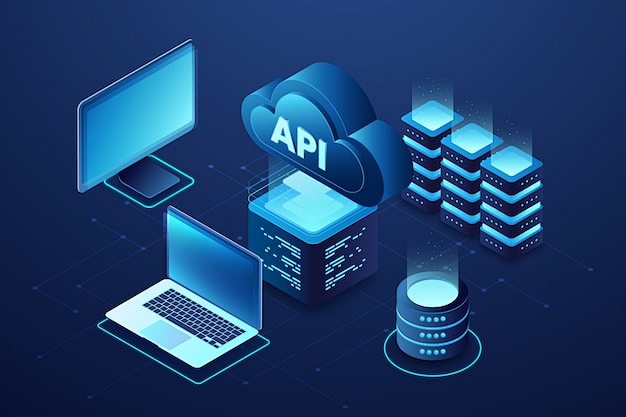
API allows two systems to exchange data and invoke functions without needing to know how the other is implemented internally. This article covers its basic concepts, common types, and the scenarios in which enterprise websites use it.

A URL is not a string of characters pieced together at random. It consists of several segments, each with a clear meaning. Understanding this structure helps you write addresses clearly and reliably during the planning stage.
CMS lets people who don't understand technology maintain website content. Its core idea is to separate content from page code. This article explains what problems it generally solves and a few things worth asking first when choosing a system.

They may all be called mini programs, but costs can differ by tenfold. The difference isn't in the name, but in which parts are ready-made and which are made for you. This article breaks down the cost structure and gives a few question checklists you can ask directly.

A website for overseas customers and a website for the domestic market are not based on the same approach. From choosing between platforms and standalone sites to domains, servers, multilingual support, search, and payments, this article lays out several core areas clearly.

As more and more users ask AI questions directly, whether a brand gets mentioned by AI has become something that needs to be actively managed. This article sorts out the goals, methods, and boundaries of GEO.

Online operations is often understood as posting content and managing accounts, but the actual responsibilities are much broader. This article explains where this role sits within cross-departmental collaboration, several common types of work it involves, and how companies should set it up.

Being indexed only means entering the candidate pool; whether a page can rank near the top is determined by a separate set of criteria. This article explains the relationship between indexing and ranking, and why the number of indexed pages is not suitable as an optimization goal.

Over-optimization can be worse than doing nothing at all. This article sorts through several common types of over-optimization—keyword stuffing, chasing backlink quantity, changing structure too frequently—and where each of their problems lies.

Keywords are not thought up off the top of one's head; they are found from real user search behavior. This article explains common methods for finding keywords from several aspects: the classification of search intent, the use of long-tail keywords, and the construction of a topic system.

Enterprises often have a batch of materials that were created but never put to use—product manuals, whitepapers, proposal PPTs. Putting them on the official website is more valuable than letting them sit on a hard drive, but there are also several issues to note.

Titles and descriptions are the first two lines seen in search results, and they must appeal to both search engines and users at the same time. This article explains how to write these two lines from several aspects: keyword placement, description writing style, and pitfalls to avoid.

Search engines all provide webmaster-oriented tool platforms for submitting pages, checking crawl status, and diagnosing issues. This article sorts through the few features in these tools that are actually used often, and what stage each is suited for.

From a designer’s perspective, the AI predicament is nothing but contradictions; move over to the buyer’s side, and the signal actually becomes clearer. The market does not pay for ideas; it pays for solved problems—this article looks back from a company’s perspective and puts it bluntly.

What the client sees is a website that has gone live. What we live through is the whole journey of turning one vague request into finished pages. Let us lay that road out and take a look at it — not to air grievances, but to return the act of building a website to its true weight.

Images are often the bulk of a page's size, and the choice of format directly affects loading speed. WebP combines the advantages of several traditional formats in a single format, making it a worthwhile default choice.

The first screen is the one where visitors spend the least time and decide whether to stay or go. Whether to use a background video or a static image is a trade-off between expressive impact and loading efficiency. This article lays out the costs of both clearly.

When images intended for printing are uploaded directly to a website, the colors usually appear grayish. The problem lies in the choice of color mode. This article explains the applicable scope of the two modes and how to check and handle images on websites.

The first screen determines whether users stay. This article discusses the tasks the first screen takes on, how to arrange the information hierarchy, whether to use a carousel, and how to judge whether it is effective after launch.

The same set of brand colors needs to be restrained on the official website and eye-catching in promotional materials. This article explains the different color requirements of these two scenarios and provides a practical set of steps for handling color palettes.

The color schemes for the official websites of construction enterprises usually need to strike a balance between professionalism and approachability. This article discusses how to draw on the colors of building materials themselves, and how to divide page colors by function, so that content becomes clearer.
Hand a domain to Holypro and we will walk the rest of the road with you. Tell us what you want to do; we will give you a plan — and tell you when something does not fit.